
ARTICLE
How to clean your Vacuum Cleaner
Published Aug 4, 2026 • Updated Aug 4, 2026 - 5 min read
Vacuum cleaners lose suction and start to smell mostly from three things: a full dust bin, a clogged filter, and a hair-tangled brush roll. Staying on top of these three jobs takes only five to ten minutes and restores near new-machine performance.
Empty the dust bin after every use, or once it hits the max fill line
Wash or replace the filter every one to three months, then let it dry fully before refitting
Clear hair from the brush roll weekly with pets in the house, otherwise every one to two weeks
Check hoses and attachments monthly for blockages, especially after vacuuming pet or long hair
Most suction loss, bad smells and charging issues are fixed with a simple at-home clean, no repair needed
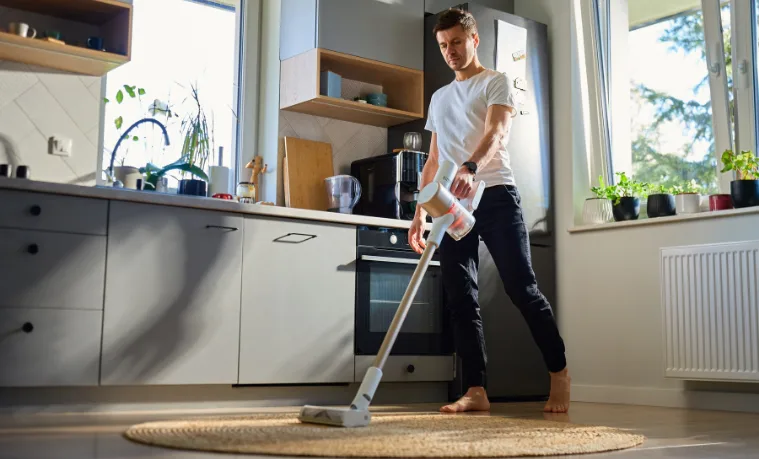
Whether you've got a cordless stick Vacuum, a robot Vacuum or a trusty barrel model, the good news is that cleaning takes five to ten minutes and doesn't need any special tools. Here's exactly how to do it, model by model, plus how to troubleshoot the most common problems.
Why regular Vacuum Cleaner maintenance matters
A Vacuum Cleaner only works as well as its airflow. Every time you Vacuum, fine dust, hair and allergens build up in the filter and wrap around the brush roll. Left alone, this build-up restricts airflow, forces the motor to work harder than it needs to, and gradually saps suction until the Vacuum feels like it's barely doing anything.
Regular cleaning fixes all of this in one go. It restores suction to near new-machine levels, stops odours before they start, and reduces wear on the motor, which means fewer repairs and a longer life for your machine. It also matters for air quality: a clogged filter can't trap fine dust and allergens as effectively, which is worth keeping in mind if anyone in your household has allergies or asthma.
How often should you clean your Vacuum?
Use this as a general schedule and adjust for pets, carpet coverage and how often you Vacuum:
Dust bin or bag: empty after every use, or once it reaches the max fill line, whichever comes first
Filter: rinse (if washable) or replace every one to three months
Brush roll: remove hair and debris weekly with pets in the house, otherwise every one to two weeks
Hoses and attachments: check monthly for blockages, especially after vacuuming pet hair or long hair
Full deep clean, including wheels, sensors and exterior wipe-down: every three months
How to clean a Cordless Stick Vacuum Cleaner
Turn the Vacuum off and remove the battery if it's detachable.
Empty the dust bin over an open bin, tapping it gently to loosen any compacted dust.
Remove the filter and rinse it under cold water if it's washable. Check your manual first, as some filters are replace-only.
Leave the filter to air dry completely for at least 24 hours before refitting it. Never use a wet filter or put it in the dryer.
Release the brush roll (usually a latch or two screws) and cut away any tangled hair with scissors, guiding it off along the roller.
Wipe out the wand and hose, checking for any hidden blockages.
Reassemble once every part is completely dry.
Want more on getting the most out of a stick Vacuum? See our guide on choosing a great stick Vacuum for easier cleans.


How to clean a Robot Vacuum
Empty the dust bin, or empty and rinse the auto-empty dock if your model has one.
Remove hair wrapped around the main brush and both side brushes, using scissors if needed.
Wipe the sensors and camera with a soft, dry cloth. Avoid liquid cleaners near sensors.
Check the wheels for hair and debris, which can stop the robot moving smoothly or cause it to get stuck.
Wipe the charging contacts on both the robot and the dock so it charges reliably.
New to robot Vacuums? Start with what is a robot Vacuum, or read about hygienic homes with auto-emptying Vacuums for more on keeping a self-emptying model running smoothly.


How to clean a Barrel or Upright Vacuum
Empty the dust bin or replace the bag once it's around three-quarters full, rather than waiting for it to fill completely.
Remove and wash or tap out the filter, letting it dry fully before refitting.
Detach the floor head and remove hair and debris wrapped around the brush roll.
Check the hose for blockages by running a broom handle gently through it, or by disconnecting it at both ends and looking through.
Wipe down the exterior and cord to remove dust build-up.


Troubleshooting common Vacuum problems
Most Vacuum problems come down to one of a handful of causes, and almost all of them can be fixed at home in a few minutes:
Symptom | Likely cause | Cleaning fix |
|---|---|---|
Losing suction | Full dust bin or clogged filter | Empty the bin and wash or replace the filter. Check hoses and attachments for blockages. |
Bad smell | Trapped dirt, hair or moisture in the filter or bin | Remove and wash the filter and bin, sprinkle a little bicarb soda inside, and let everything dry fully before reassembling. |
Won't turn on or hold charge | Flat battery, faulty charging connection or a blocked motor | Charge fully on the dock, check the charging contacts are clean, and clear any blockages in the airway. |
Brush roll not spinning | Hair tangled around the roller or a worn drive belt | Remove the brush roll, cut away tangled hair with scissors, and check the belt for wear or damage. |
Streaks or marks left on floors | Dirty or worn brush roll bristles | Clean the brush roll thoroughly, and replace it if bristles are flattened or missing. |
Robot Vacuum gets stuck or spins in circles | Dirty sensors, tangled wheels or a full bin | Wipe sensors with a soft dry cloth, remove hair from the wheels, and empty the bin. |
Keep your Vacuum performing at its best
A five-to-ten minute clean every couple of weeks is all it takes to keep your Vacuum performing like new and protect what's often a significant household investment. If you've worked through these steps and your Vacuum still isn't picking up properly, it may be worth comparing your current model against what's available now — read our Vacuum Cleaner buying guide to see what's changed, or browse our full range of Vacuums and cleaners if it's time for an upgrade. For more on choosing the right model for allergies or specific needs, see best Vacuum Cleaners for allergies and our roundup of the best Vacuum Cleaners in Australia.
FAQs
Empty the dust bin after every use, clean the brush roll every one to two weeks, and wash or replace the filter every one to three months. Households with pets or heavy carpet use should clean more often.
Loss of suction is almost always caused by a full dust bin, a clogged filter or a blocked hose, not a broken machine. Empty the bin, wash or replace the filter, and check the hose and attachments for trapped debris before assuming you need a replacement.
Empty the dust bin, remove hair wrapped around the main brush and side brushes, wipe the sensors and wheels with a soft dry cloth, and clean the charging contacts and auto-empty dock if your model has one.
Turn the Vacuum off, empty the dust bin, remove and wash the filter, and take out the brush roll to cut away any tangled hair. Let all washable parts dry fully for 24 hours before reassembling.
Bad smells usually come from trapped dirt, hair or moisture in the filter or dust bin. Wash both thoroughly, add a small sprinkle of bicarb soda to the bin, and make sure every part is completely dry before you put the Vacuum back together.
Empty the dust bin after every use, rinse or tap out the filter to remove fine dust, and check the small brush attachment for trapped hair and debris. Because car Vacuums have compact filters, clean them more often than a household model.


