ARTICLE
Is a Downdraft Induction Cooktop right for you?
Published Jun 23, 2026 • Updated Jul 1, 2026 - 4 min read
Key takeaways
A downdraft induction cooktop pulls cooking fumes down and out – or recirculates them – without a traditional overhead rangehood.
These cooktops are ideal for kitchen islands, open-plan spaces and minimalist designs where a rangehood isn’t practical.
The built-in ventilation system may reduce under-bench storage but can struggle with tall stockpots.
You can choose between ducted (vented outside) or recirculating (filtered and returned) installation.
Compatible cookware must be ferromagnetic – the same requirement as any induction cooktop.
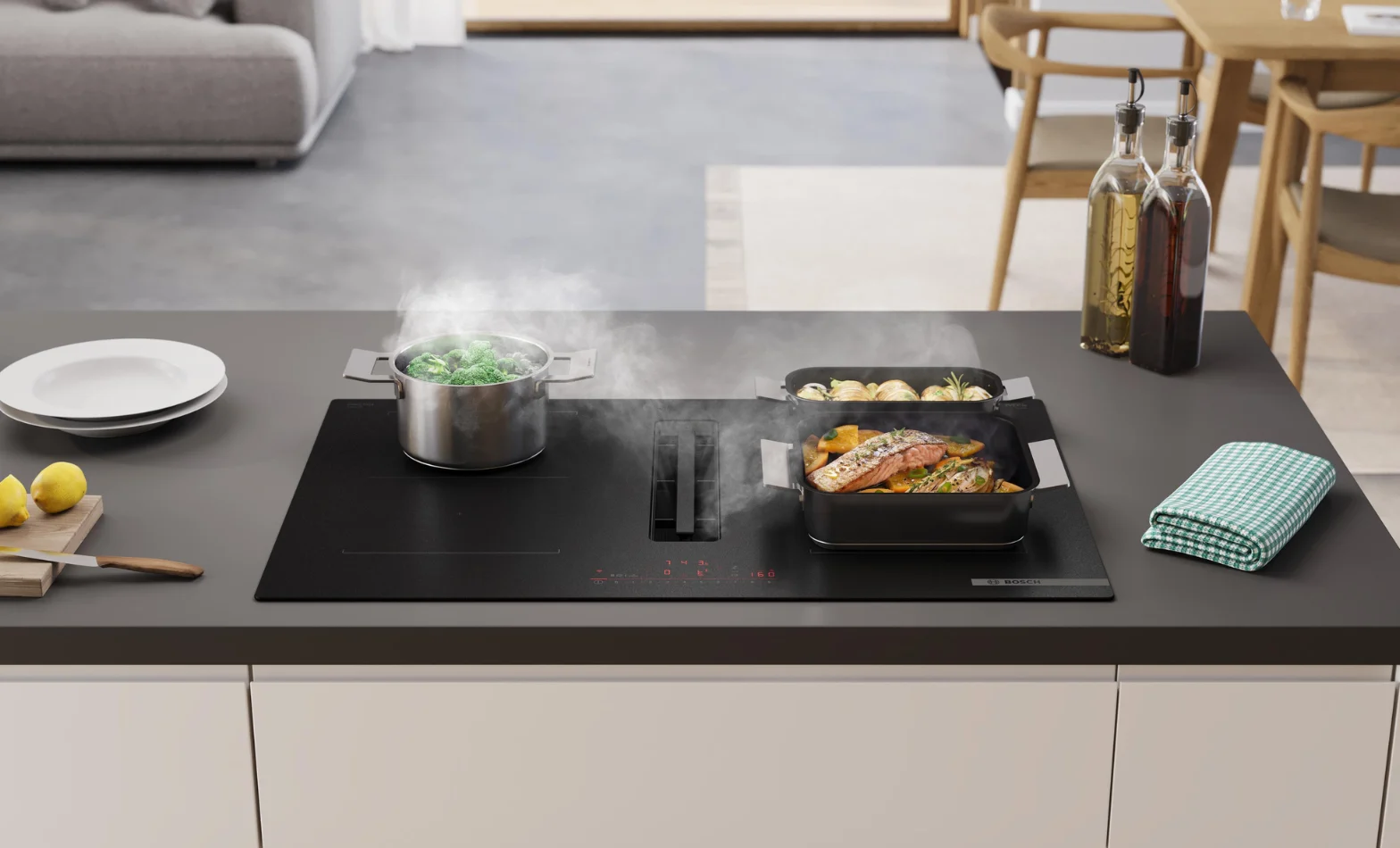
So, what is a downdraft induction cooktop and how does it work? Put simply, A downdraft induction cooktop combines an induction cooktop and a built-in ventilation system into a single appliance – no overhead rangehood required. Instead of an overhead rangehood capturing rising steam and odours, the downdraft system draws air downward. Fumes are pulled away from the cooking surface and either vented outside through ducting or filtered and recirculated back into the kitchen. Here’s what you need to know before making the switch…
Is a Downdraft Induction Cooktop worth the investment?
Here are some of the big wins these Induction Cooktops offer …
The ultimate solution for kitchen islands
Running ducting to an overhead rangehood above a kitchen island is expensive and not always structurally possible. A downdraft induction stove eliminates that problem entirely. The extraction system is self-contained, so you get full cooking and ventilation capability without any overhead infrastructure.
Sleek, minimalist aesthetics
Without a rangehood dominating the visual space above the cooktop, the kitchen feels more open. “For anyone working with induction cooking as part of a minimalist brief, a downdraft model keeps sightlines clear and surfaces uncluttered,” says Tania Grillinzoni, The Good Guys Buyer – Cooking.
Easier cleaning at eye level
Rangehood filters accumulate grease over time and require regular cleaning at height. Downdraft cooktop filters sit at bench level and are typically easier to access, remove and clean. Many models also have self-cleaning or dishwasher safe filter options.
What are the downsides of a Downdraft Induction Cooktop?
Here are a few limitations worth considering…
The loss of under-bench storage space
“Because the integrated extraction unit sits below the cooktop, it occupies the cabinet space underneath. Depending on the model, you’ll lose one or more drawers or shelves,” says Tania. “If under-bench storage is non-negotiable in your layout, a traditional separate cooktop and rangehood combo might be a better fit.”
The tall pot challenge
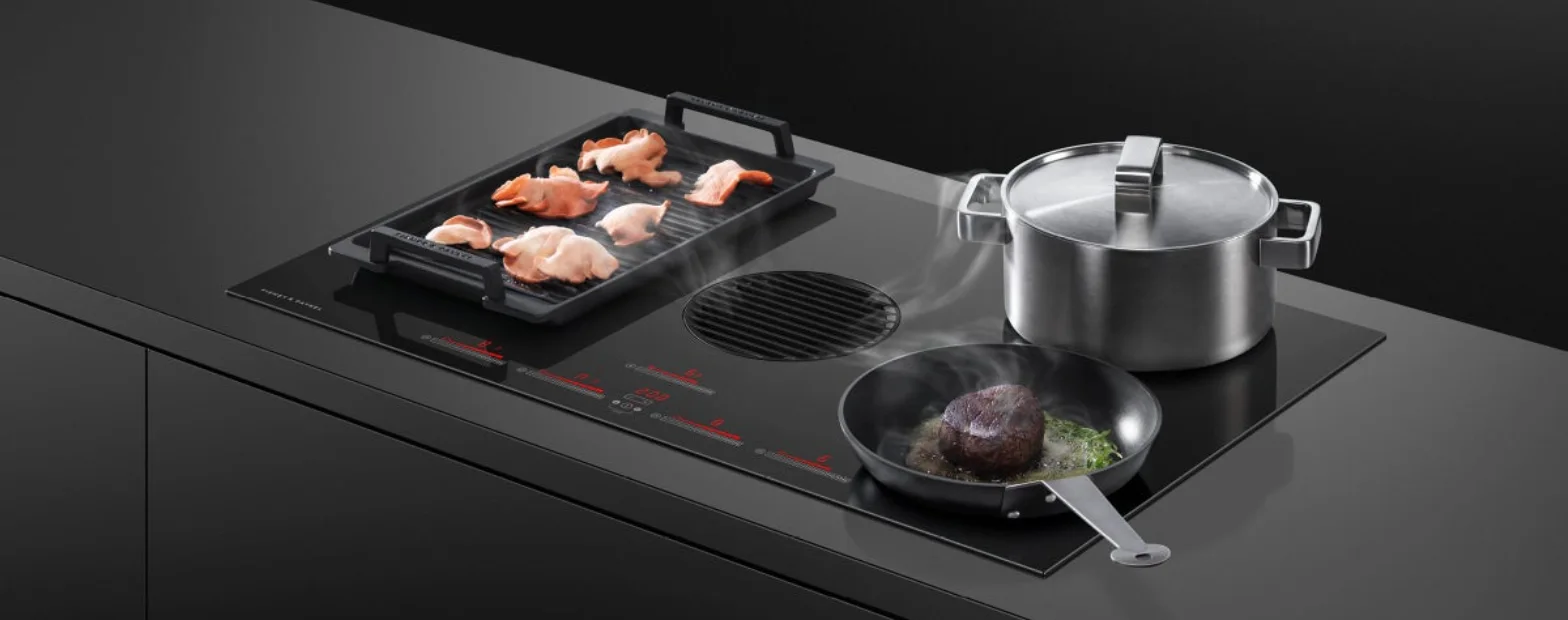
Downdraft extraction works by pulling air downward – which means it’s most effective when steam and fumes are close to the surface. Tall stockpots, large woks or very high-sided pans can partially block airflow, reducing the system’s efficiency.
Choosing the right size
A 70cm induction cooktop suits smaller kitchens or a four-burner configuration in a compact space.
An 80cm induction cooktop offers more cooking zones and suits mid-size kitchens.
A 90cm induction cooktop is ideal for larger kitchens or households that cook for a crowd.


Downdraft Cooktop installation: ducted vs recirculating
Before choosing a model, you’ll need to decide how the air will vent:
Ducted installation: Sends cooking fumes outside through floor or wall pipework. This is the most effective method for completely removing heat, moisture, and odours.
Recirculating installation: Uses carbon and grease filters to clean the air before returning it to the kitchen. This is highly practical for apartments or rental spaces where external ducting isn’t an option.
Downdraft vs traditional Rangehood: Which is better?
The honest answer is that it depends on your kitchen and how you cook. Here’s a quick comparison:
Feature | Downdraft cooktop | Traditional Rangehood + Cooktop |
|---|---|---|
Ventilation method | Integrated (draws air down) | Overhead extraction |
Suits kitchen islands | Yes – ideal | Difficult, expensive ducting required |
Under-bench storage | Reduced | Unaffected |
Aesthetics | Minimalist, flush | Rangehood visible above cooktop |
Tall pot performance | Can be limited | Generally unrestricted |
Installation | Single appliance | Two separate appliances |
Filter maintenance | Bench-level access | At height |
Best for | Islands, open-plan designs, minimalist kitchens | High-volume cooking, maximum extraction |
“Downdraft induction cooktops have transformed open-plan kitchen design. The integrated ventilation means you aren’t compromising on performance or aesthetics. For kitchen islands especially, they’re often the most practical solution.
”
Tania Grillinzoni, The Good Guys Buyer – Cooking
The verdict: Should you make the switch?
Choose a downdraft induction cooktop if:
You’re installing a cooktop into an island bench.
You want an open, rangehood-free visual aesthetic.
You’re renovating an apartment where overhead ducting is impossible.
You want simple, bench-level filter cleaning.
Consider an alternative if:
Every inch of under-bench drawer storage matters to you.
You regularly cook with tall stockpots.
Your budget is strictly fixed – downdraft models typically carry a higher upfront cost than standard cooktop and rangehood pairings.
Looking for induction cooktops? You’ll find them at The Good Guys! Visit us in store or online.
FAQs
Do you still need a rangehood with a downdraft induction cooktop?
No – the extraction system is integrated into the cooktop itself.
What cookware is compatible with a downdraft induction cooktop?
The same cookware requirements apply as with any induction cooktop. Pots and pans must be made from a ferromagnetic material – cast iron, magnetic stainless steel or induction-rated cookware. You can test compatibility by checking whether a magnet sticks firmly to the base of the pot or pan.
Does a downdraft induction cooktop need to be vented outside?
No — it depends on the model you choose. Ducted models vent fumes outside through floor or wall pipework and are the most effective at fully removing heat, moisture and odours. Recirculating models use carbon and grease filters to clean the air and return it to the room, which makes them practical for apartments or homes where external ducting isn't possible.