ARTICLE
Ovens: what to check before you buy (installation guide 2026)
Published Sep 9, 2026 • Updated Sep 9, 2026 - 4 min read
Buying an oven is only half the job. Getting it installed safely, without ripping up cabinetry or calling out an electrician twice, depends on decisions you make before you pay for it. Fuel type, size, and power connection all need to line up with your kitchen before the new oven arrives, not after.
Key takeaways from this article
Decide on fuel type (electric or gas) first, since it determines the connection your kitchen needs and whether a licensed gasfitter or electrician is required.
Confirm your oven's form factor, built-in, wall, freestanding, or standalone, against your existing or planned cabinetry before you buy.
Measure your cutout width, height, and depth against the manufacturer's specifications, not just the appliance you're replacing.
Check that your home's electrical circuit can handle the oven's wattage, especially for pyrolytic (self-cleaning) models, which draw more power.
Gas oven and cooktop installations must be completed by a licensed gasfitter, and most electric oven installations require a licensed electrician under Australian wiring rules.
Keep compliance certificates from your installation, they're often required for insurance, warranty claims, and resale.
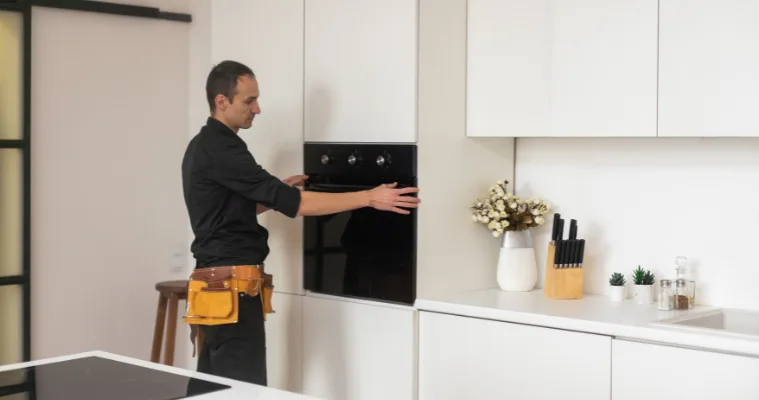
This guide walks through what to check before you buy, so your installation goes smoothly the first time.
Why installation matters when choosing an Oven
An oven that looks right in the showroom can still be the wrong choice for your kitchen. The cutout might be a few millimetres too narrow, the power supply might not be rated for it, or the fuel type might not match what's already connected to your wall.
Sorting these details out before you buy avoids the two most common installation headaches: a return trip to the store, or an unplanned call to a tradesperson to modify your kitchen's wiring or gas line. For a broader look at features and pricing, our oven buying guide covers the purchase decision end to end. This guide focuses specifically on what happens between choosing your oven and switching it on.
Electric vs Gas Ovens: fuel type and connection requirements
Fuel type is the first decision to make, because it determines what's already available in your kitchen and what a tradesperson needs to install.
Electric ovens run on a dedicated electrical circuit. Most full-sized electric ovens need a 240V connection, and larger or higher-wattage models are typically hardwired rather than plugged into a standard power point. If you're renovating, this means confirming with your electrician that the right circuit is already run to the cavity before the oven arrives.
Gas ovens connect to a natural gas or LPG line and need a compliant gas connection point installed by a licensed gasfitter. If your kitchen doesn't already have a gas line, running one is a bigger job than an electrical retrofit, so it's worth confirming early if gas is your preference. Browse our gas oven range once you've confirmed your connection.
Some kitchens run a gas cooktop with an electric oven underneath, known as dual fuel. This is common in Australian homes and simply means checking that both connection types, gas and electric, are present or can be installed.


Built-in, wall, Freestanding or Standalone: which fits your kitchen?
Once you've settled on fuel type, form factor is next. Each style has different installation implications.
Built-in ovens sit within existing cabinetry, either under the benchtop or as part of a wall oven cavity. They offer the most flexibility for kitchen design but rely entirely on the cutout being the correct size.
Wall ovens are installed at eye level or bench height within a cabinetry cavity, separate from the cooktop. This is a popular choice for renovation planners because it allows the cooktop and oven to be positioned independently.
Freestanding ovens combine the cooktop and oven in a single unit that sits between two cabinets rather than being built in. They're generally the simplest to install and replace, making them a common choice for first home buyers or straightforward upgrades.
Standalone ovens are similar to freestanding units but are designed to sit on their own, without cabinetry on either side. For a deeper comparison, see our guide to wall ovens versus freestanding ovens, or explore our freestanding oven range if that's the fit for your space.


Measuring your space: cutout dimensions and clearances
Cutout dimensions vary by brand and model, so always check the manufacturer's specifications rather than assuming your new oven will match the old one.
As a general guide, built-in single ovens commonly require a cavity around 560 to 600mm wide, with height and depth varying depending on whether the oven sits under the benchtop or within a tall cabinetry run. Double ovens and larger capacity models need a taller cavity, so measure twice if you're upgrading to a bigger unit.
Beyond the cutout itself, check clearance requirements around the oven for heat dissipation and ventilation. Manufacturers specify minimum gaps between the appliance and surrounding cabinetry, and skipping this step can affect both safety and warranty coverage. If you're replacing an ageing oven, our guide on best freestanding ovens can help you shortlist models once your measurements are confirmed.
Power requirements and electrical considerations
Every electric oven has a power rating listed in its specifications, and this determines what circuit it needs. Standard single ovens are generally fine on existing circuits in newer homes, but higher-wattage models, and particularly pyrolytic ovens, draw significantly more power because of the high heat needed for their self-cleaning cycle.
If you're installing a pyrolytic oven, check with a licensed electrician whether your existing circuit can handle the load or whether an upgrade is needed. Our explainer on how pyrolytic ovens work is a useful next step if you're weighing up whether the feature is worth the extra electrical consideration.
Older homes, in particular, may need a circuit upgrade to safely support a modern oven, so this is worth confirming before you commit to a purchase date.
When you need a licensed tradesperson
In Australia, electrical work on fixed appliances, including hardwiring an oven, must be carried out by a licensed electrician in line with the AS/NZS 3000 wiring rules. This isn't optional, and it protects both your safety and your warranty.
Gas appliance installation and connection must be completed by a licensed gasfitter, who will also issue a compliance certificate confirming the work meets Australian gas safety standards. Keep this certificate, along with any electrical compliance documentation, as it's often required for insurance, home warranty claims, and when selling your property.
If you're unsure whether your installation needs a tradesperson, the safest assumption is yes. The Good Guys team can confirm this as part of the sale, so ask the question! To learn more about our services, check out our Oven Installation Home Services.
Your pre-purchase installation checklist
Before you buy, confirm the following:
Fuel type: electric, gas, or dual fuel, and whether the matching connection already exists in your kitchen
Form factor: built-in, wall, freestanding, or standalone, matched to your cabinetry plan
Cutout dimensions: width, height, and depth checked against the manufacturer's specifications, not the appliance you're replacing
Clearance requirements: minimum gaps around the oven as specified by the manufacturer
Power rating: confirmed against your existing circuit, with an electrician consulted for pyrolytic or high-wattage models
Tradesperson requirements: licensed electrician for electrical connection, licensed gasfitter for gas connection
Compliance certificates: requested and kept on file after installation
Once your checklist is complete, you're ready to shortlist models with confidence. Explore our full oven range or see our pick of the best rated ovens in Australia to start comparing.
FAQs
In most cases, yes. Hardwiring an electric oven, or connecting it to a dedicated circuit, is electrical work that must be carried out by a licensed electrician under the AS/NZS 3000 wiring rules. This ensures the installation is safe and keeps your warranty valid.
Cutout sizes vary by brand and model, but built-in single ovens commonly need a cavity around 560 to 600mm wide. Always measure your existing cavity's width, height, and depth, then check these against the manufacturer's specifications for the model you're considering, rather than assuming a like-for-like fit.
A built-in oven is installed within existing cabinetry, either under the benchtop or as part of a wall oven cavity, and is separate from the cooktop. A freestanding oven combines the cooktop and oven in one unit that sits between two cabinets, making it generally simpler to install and replace.
Yes, this is a common setup known as dual fuel, where a gas cooktop sits above an electric oven. It requires both a gas connection point for the cooktop and an electrical circuit for the oven, so check that both are present or can be installed before buying.
Confirm the oven's power rating in its specifications, then check this against your existing circuit with a licensed electrician. Larger or higher-wattage ovens, including pyrolytic models, often need a dedicated circuit rather than relying on an existing power point.
A pyrolytic oven uses extremely high heat to burn off food residue, removing the need for manual scrubbing or chemical cleaners. It's a genuine convenience feature, but it draws more power than a standard oven, so factor the electrical requirement into your installation planning.
A convection oven uses a fan to circulate hot air, cooking food more evenly and often faster than a conventional oven, which relies on static heat from the top and bottom elements. Convection is a useful feature to check for regardless of the fuel type or form factor you choose.