ARTICLE
Induction Cooktop buying guide: Which features matter?
Published Jun 23, 2026 • Updated Aug 28, 2026 - 4 min read
Key takeaways
Induction cooktops are faster, safer and more energy efficient than gas or electric alternatives.
Features such as flexible zones, Power Boost and auto pan detection can be worth the investment – others are nice to have but not essential.
Size matters: Match your cooktop to your kitchen layout and how many people you usually cook for.
All induction stoves require cast-iron or magnetic stainless steel cookware.
Portable electric cooktops are a practical option for renters, small kitchens or as a second cooking zone.
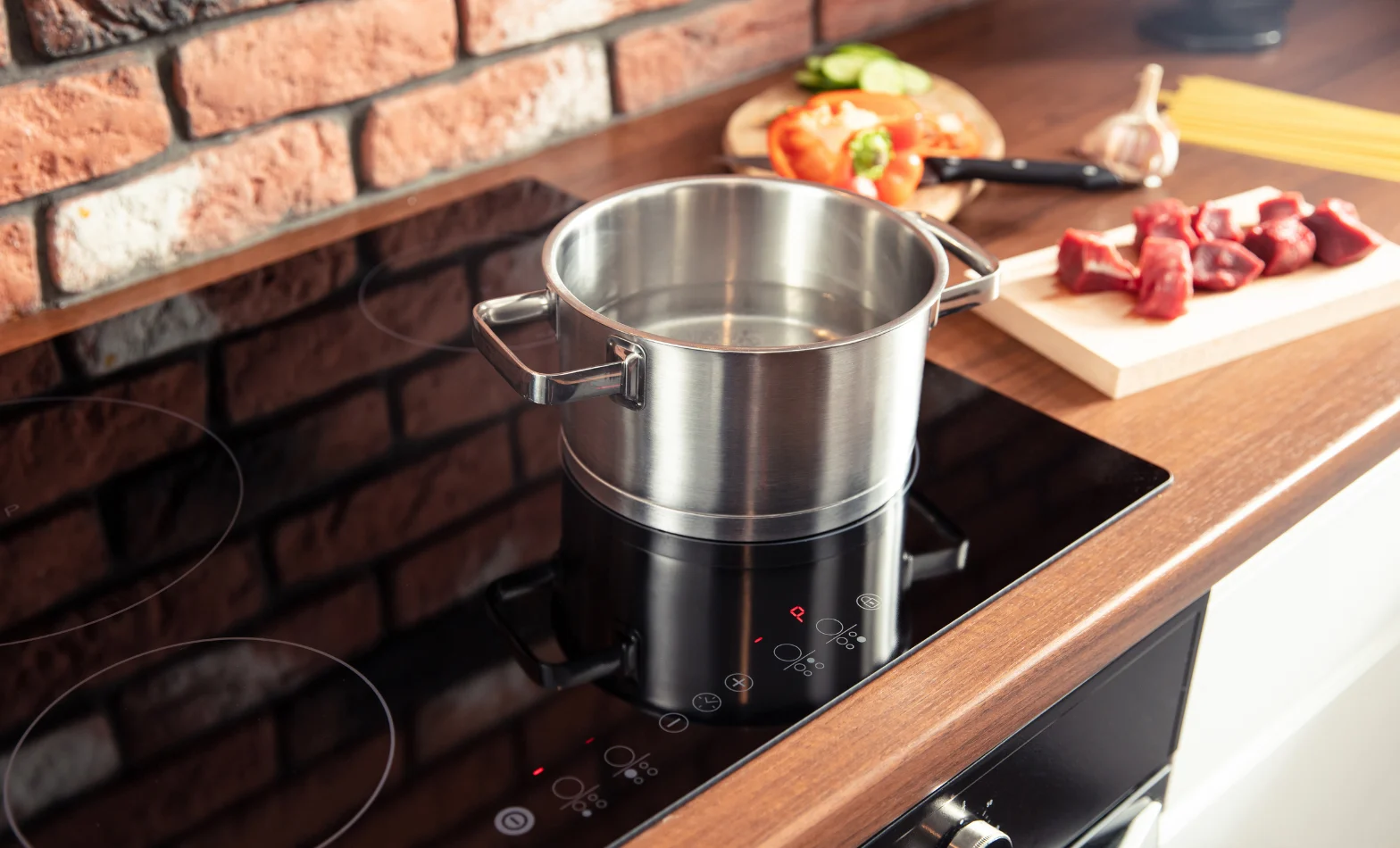
The right induction cooktop can transform the way you cook – but with so many sizes, features and price points to navigate, choosing one isn’t always straightforward. Whether you’re looking for a portable induction cooktop for a compact space or a built-in model for a full kitchen renovation, this guide breaks down what features genuinely matter…
Why switch to an Induction Cooktop?
“Induction cooking uses electromagnetic energy to heat the pan directly rather than the cooktop surface. This results in incredibly fast heat-up times, precise temperature control and a safer kitchen environment,” says Tania Grillinzoni, The Good Guys Buyer – Cooking. “Because the glass surface itself doesn’t generate heat, spills won’t burn onto the cooktop, making it much easier to clean.”
Is an Induction Cooktop more energy efficient than gas?
Yes, significantly. An induction cooktop transfers roughly 85-90 per cent of its energy directly to the cookware, compared to just 40-55 per cent for gas. This minimises wasted ambient heat and lowers energy consumption.
Portable, built-in or downdraft Cooktop: Which type suits you?
Portable induction cooktop: A standalone, plug-in single or two-burner induction cooktop. Perfect for renters, small apartments, or outdoor entertaining.
Built-in induction cooktop: Hardwired and installed flush into your benchtop. Available in 60cm to 90cm widths, this is the standard choice for renovations.
Downdraft induction cooktop: Combines a built-in cooktop with an integrated extraction system, eliminating the need for an overhead rangehood. Ideal for kitchen islands.
Which Induction Cooktop features are worth paying extra for?
“With induction cooktops, the premium features genuinely change how you cook day to day. Flexible zones and a Power Boost function aren’t just specs on a page – they’re the features our customers find indispensable.
”
Tania Grillinzoni, The Good Guys Buyer – Cooking
Feature | What it does | Worth it? |
|---|---|---|
Flexible cooking zones | Bridges two separate zones into one large area for griddles, teppanyaki plates or long roasters | Essential for families and entertainers |
Power Boost | Temporarily draws maximum power to flash-boil water or heat pans rapidly | Yes, saves significant time daily |
Touch controls with temperature slider | Allows you to slide a finger to change temperatures instantly rather than repeatedly tapping plus/minus keys | Yes, much more intuitive and precise |
Auto pan detection | Shuts off power instantly when a pan is lifted or if a liquid boils over onto the controls | Yes, an excellent safety and energy-saving feature |
Child safety lock | Disables the control panel to prevent accidental activation | Essential for households with children or pets |
Nice-to-have features
These premium additions are highly convenient but may not be strictly necessary for every home cook:
Integrated rangehood control: Allows the cooktop to automatically adjust a compatible rangehood’s fan speed based on your cooking intensity. (Note: Only works if both appliances are from the same brand family).
Pause function: Instantly drops all active zones to a low-simmer setting if you need to step away from the kitchen briefly, resuming your exact temperatures when pressed again.
Guided cooking: Found on top-tier models, this technology uses sensor-aligned apps to step you through recipes with automated temperature adjustments.
What size Induction Cooktop do I need?
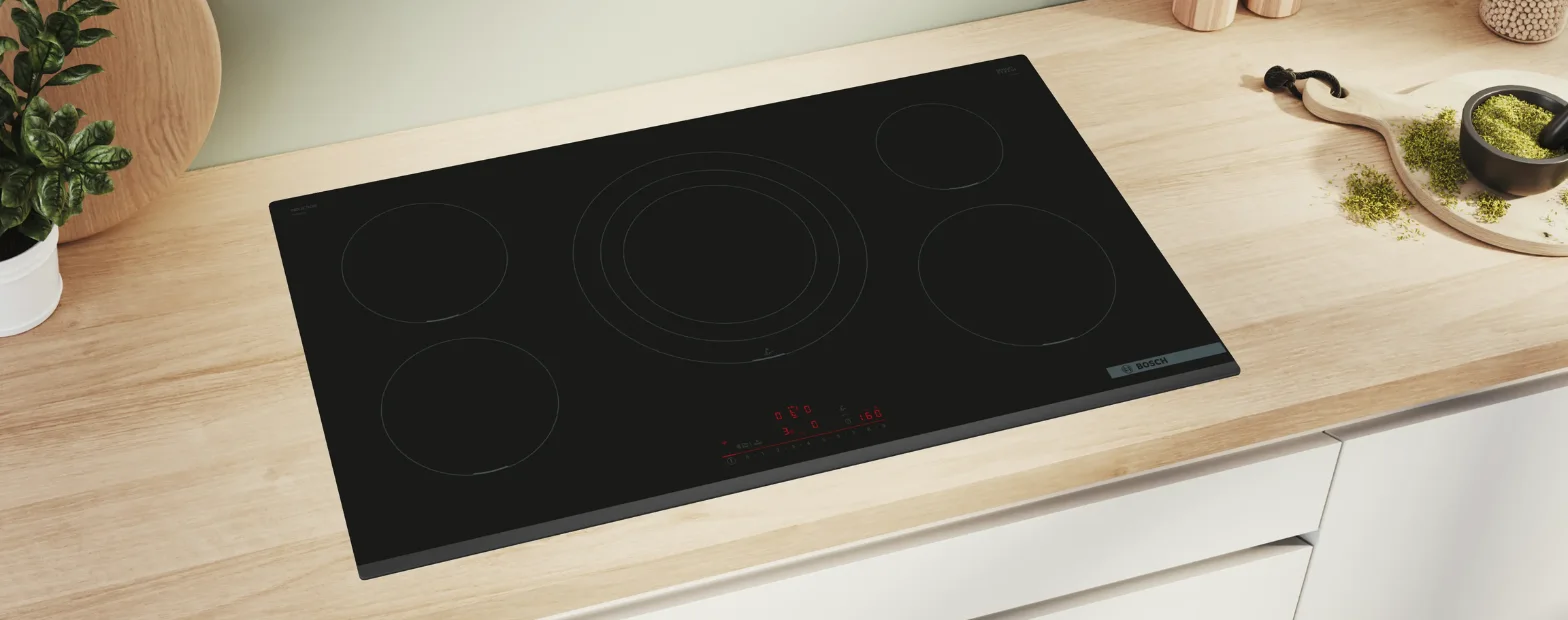
“Choosing the right cooktop size is about balancing your existing bench cutout with how you actually live and cook,” says Tania Grillinzoni. “While a standard 60cm model is the go-to for most homes, upgrading to a 70cm, 80cm or 90cm cooktop gives you the vital extra space needed to handle multiple large pots and pans simultaneously.”
What cookware do you need for an Induction Cooktop?
Induction cooktops require cookware with a magnetic base. Ferromagnetic materials such as cast iron, enamelled cast iron and induction-ready stainless steel work perfectly. Pure copper, aluminium and standard ceramic pans will not work.
The magnet test: Hold a simple fridge magnet to the base of your pan. If it sticks firmly, your cookware is ready for induction.
Looking for induction cooktops? You’ll find them at The Good Guys! Visit us in store or online.
FAQs
What’s the difference between an Induction Cooktop and an Electric Cooktop?
An electric cooktop uses an element to heat either a ceramic glass surface or the pan directly. An induction cooktop uses electromagnetic energy to heat the pan itself, making it significantly faster, more responsive and more energy efficient. The cooktop surface itself stays relatively cool.
Who should not use an Induction Cooktop?
Individuals with implanted cardiac devices (such as pacemakers) should consult their medical specialist before purchasing an induction cooktop. Because induction relies on electromagnetic fields, it can occasionally interfere with certain medical devices if handled too closely.
How should I clean my induction cooktop?
Cleaning an induction cooktop is incredibly easy. Because the glass surface stays relatively cool during cooking, rogue oil splatters and spills won’t bake or crust onto the hob. Simply wait for the zones to turn off, then wipe the surface clean with a damp microfibre cloth and gentle glass spray.
Do I need special pans for an Induction Cooktop?
Yes, cookware compatibility is important. Induction Cooktops require magnetic cookware to activate the heating process. Cast-iron, steel, and magnetic stainless steel pots and pans work perfectly, while pure aluminum or copper pans will not operate unless they feature a specialised induction-compatible base.
Is Induction faster than Gas cooking?
Absolutely. Induction Cooktops boil water and heat pans significantly faster than gas because energy is generated directly inside the cookware itself, rather than relying on a flame to transfer heat through the air to the pan.