ARTICLE
How to clean an air fryer: easy, safe steps
Published Mar 10, 2026 • Updated Nov 19, 2026 - 4 min read
To clean an air fryer, unplug it and let it cool, then soak the basket and drawer in hot, soapy water with a little bicarb soda and wipe them with a soft sponge. Wash the removable parts after every use, wipe the cavity and heating element every week or two, and only use the dishwasher if your manual says it's safe.
Key takeaways from this article
Unplug and cool the air fryer before cleaning any part of it.
Soak greasy parts in hot water, dishwashing liquid and bicarb soda instead of scrubbing.
Never immerse the main unit, and avoid scourers, steel wool and harsh chemicals.
Check your manual before using the dishwasher, a degreaser or a steam clean function
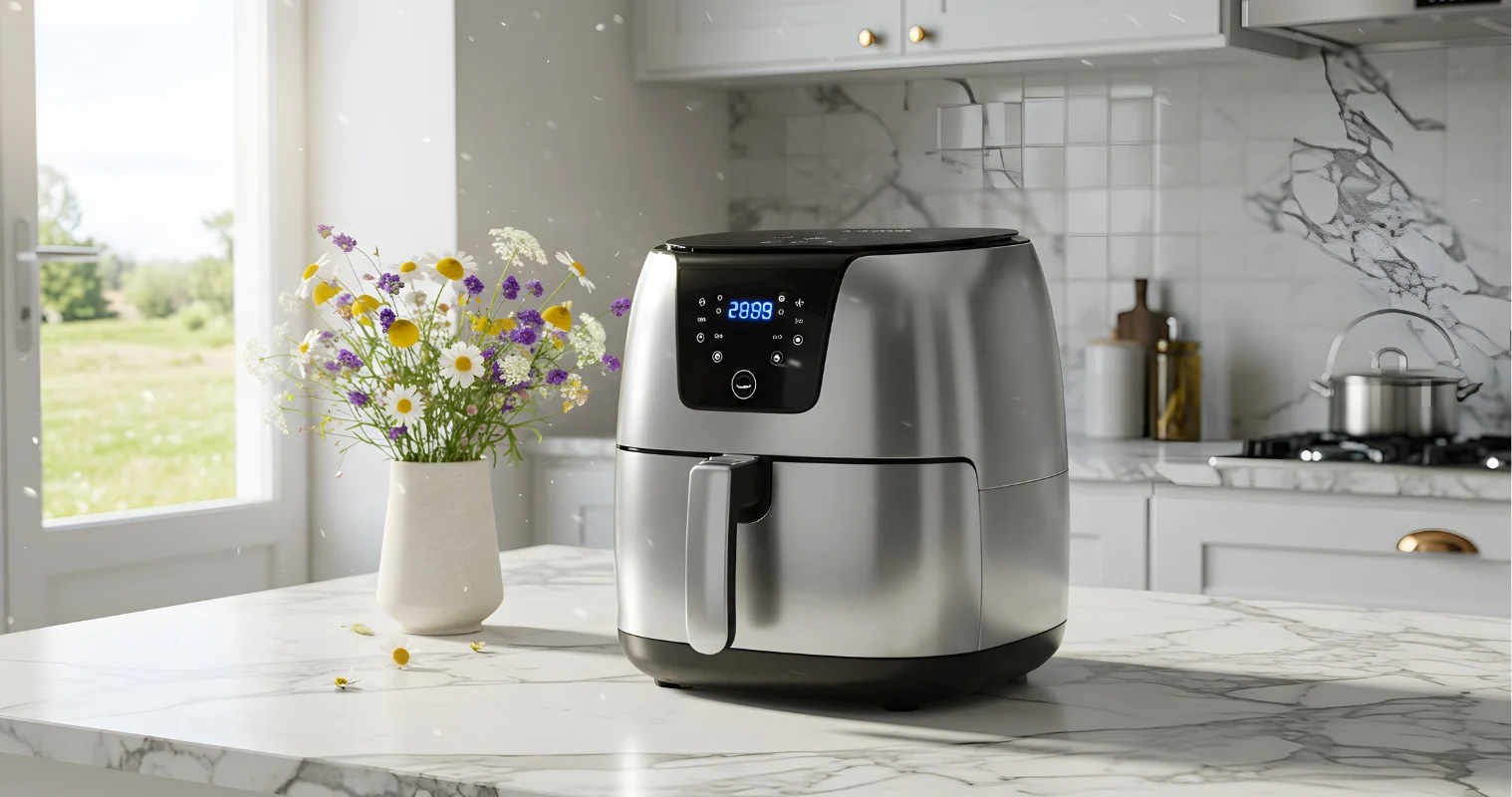
Most air fryers fall into two types: basket or drawer models, and oven-style models with racks, trays and a crumb tray. In both, the parts that touch food are usually removable and often non-stick, while the main body houses the fan and heating element and should only ever be wiped clean. Here's how to clean every part safely, plus how often to do it.
Why cleaning your air fryer matters
Every cook leaves behind a little fat, crumbs and splatter. Left in the drawer or baked onto the heating element, that residue can cause white smoke, burnt smells and flavours that carry over from one meal to the next. Built-up grease can also smoke and, in rare cases, catch alight.
Regular cleaning also protects your investment. Gentle cleaning keeps non-stick coatings intact, so food releases easily and the basket lasts longer. New to air fryers? Learn how air fryers work.
Signs your air fryer needs a clean
It's time for a deeper clean if you notice any of these:
White smoke during cooking, especially with fatty foods.
Burnt or stale smells when the air fryer heats up.
Food tasting like the last thing you cooked.
A sticky or tacky feel on the basket or drawer.
Visible splatter or residue on the heating element or the top of the cavity.
Food sticking more than it used to.
How often should you clean your air fryer?
Clean the removable parts after every use and do a deeper clean every week or two, depending on how often you cook. Use this schedule as a guide, and follow your user manual where it differs.
Task | How often |
|---|---|
Empty rendered fat and crumbs (and the drip or crumb tray on oven-style models) | After every use |
Wash the basket, crisper plate and drawer (or racks and trays on oven-style models) | After every use |
Wipe the cavity if splatter is visible | After every use |
Hot soak for greasy parts | Weekly, or fortnightly for lighter use |
Brush and check the heating element | Weekly, or fortnightly for lighter use |
Clean the door glass (oven-style models, or models with a window) | Weekly |
Wipe the exterior and control panel | Monthly, or as needed |
Check the non-stick coating for wear | Monthly |
Note: these frequencies are general guidance only. If you cook a lot of fatty, marinated or crumbed food, clean the cavity and element more often.
The quick no-scrub cleaning method
For everyday grease and stuck-on bits, a hot soak does most of the work for you. It takes about five minutes of hands-on time and is gentle on non-stick coatings.
You'll need: dishwashing liquid, bicarb soda, hot water from the kettle, a soft sponge or microfibre cloth, a soft-bristled brush (an old toothbrush works well) and a toothpick or wooden skewer.
Switch off at the wall, unplug the air fryer and let it cool completely. Philips recommends allowing around 30 minutes.
Remove the basket and crisper plate, then tip crumbs and rendered fat into the bin rather than down the sink.
Sprinkle about 2 tablespoons of bicarb soda into the drawer, add a few drops of dishwashing liquid and pour in hot water until the greasy areas are covered. Add the basket and crisper plate, or soak them in the sink.
Leave to soak for 20 to 30 minutes. For light everyday grease, five to ten minutes is often enough.
Wipe everything with a soft sponge, use the brush on textured surfaces and push a toothpick through any blocked holes in the mesh.
Rinse with clean water and dry every part thoroughly before putting it back.
Adding a splash of white vinegar to the soak helps neutralise lingering smells from fish or spicy food.
What about steam cleaning?
Some newer air fryers have a built-in steam clean function. On Philips' 5000 Series steam models, for example, you fill the water tank and run a 20-minute program that steams and then dries the large pan. If your model has this feature, follow the manual.
You may also have seen a hack that involves filling a standard air fryer drawer with water and detergent and running it to create steam. Many manufacturers, including Philips for its standard Airfryers, advise against letting water or other liquids into the appliance, so only try this if your manual allows it. Soaking the parts outside the unit gets a similar result with less risk.
How to clean each air fryer component
Each part of an air fryer needs slightly different care. Here's how to clean them without causing damage.
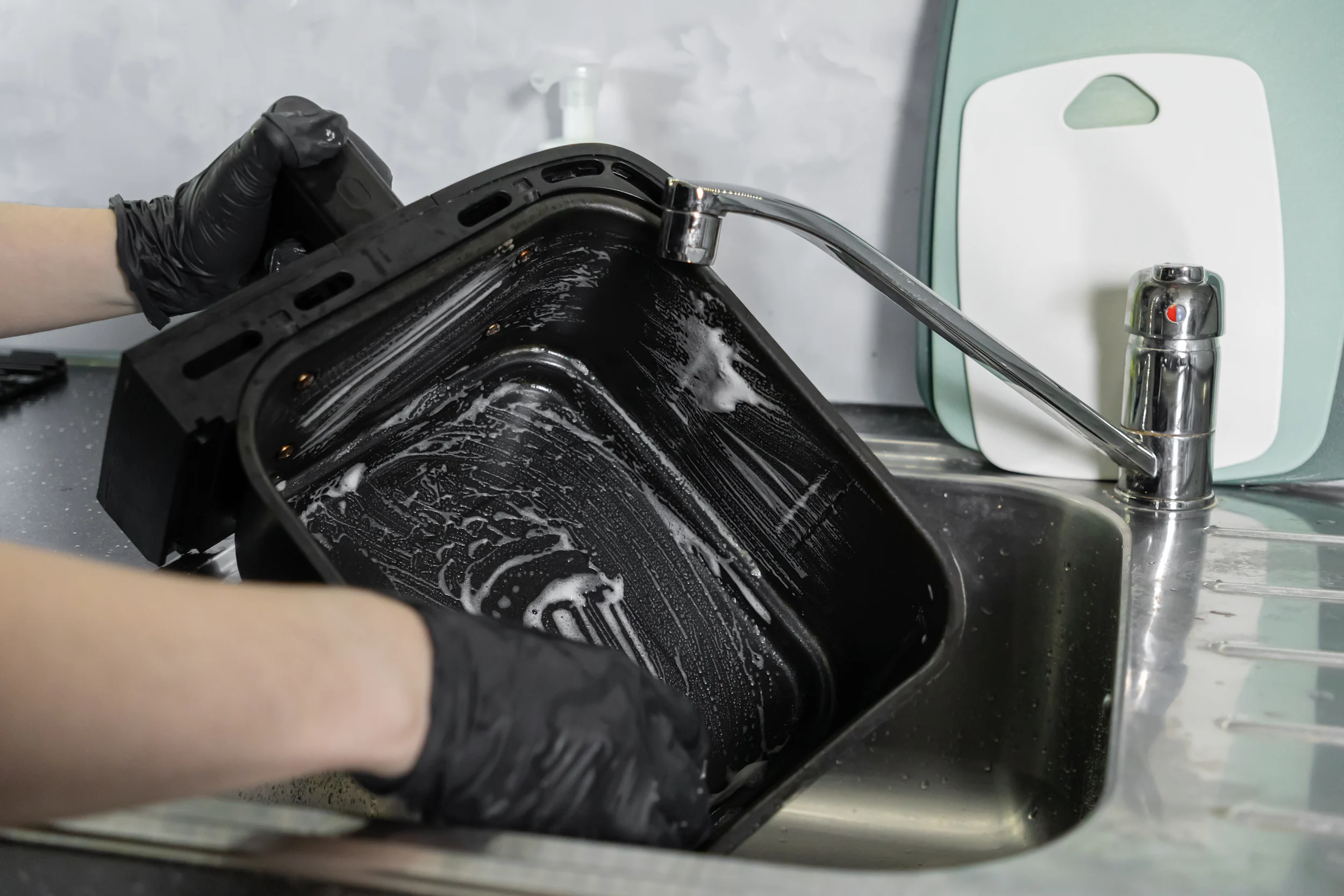
Basket and crisper plate
Wash in warm water with dishwashing liquid and a non-abrasive sponge after every use.
Soak greasy mesh or grill plates first, then work into the grooves with a soft brush.
Clear any blocked holes with a toothpick, then rinse and dry.
Drawer or pan
Empty any fat and crumbs after every cook.
Wash with warm, soapy water, or use the no-scrub soak above for baked-on grease.
Use a liquid degreaser on stubborn fat stains only if your brand permits it.
Dry completely before sliding it back in.
Inside the cavity
With the drawer removed and the unit unplugged and cool, wipe the inside walls with a soft cloth dampened with warm, soapy water.
Wring the cloth out well so no water drips into the electronics.
Clean any splatter near the top of the chamber now, before it hardens.
Heating element
The heating element sits at the top of the cavity and is the part most people forget, yet grease here is a common cause of smoke and burnt smells.
Make sure the air fryer is unplugged and fully cool.
If your manual allows it, turn the unit upside down so you can see the element.
Gently brush away residue with a dry, soft-bristled brush, or wipe with a soft sponge and hot water if your manual recommends it.
For stubborn grease, apply a paste of bicarb soda and a little water with a soft toothbrush, leave it for about 20 minutes, then wipe it off with a damp cloth.
Once everything is dry, turn the air fryer upright and run it empty for a few minutes. Philips suggests this so any loosened residue drops into the pan.
Never soak the element, use a steel brush or scraper on it, or unscrew a protective cover to get behind it. If a grill or guard covers the element, simply wipe the grill with a damp cloth.
Exterior and control panel
Wipe the outside with a slightly damp microfibre cloth and a drop of mild detergent, then buff dry. Spray any cleaner onto the cloth rather than onto a touch panel or display, and never immerse the main unit or run it under the tap.
Oven-style and dual-drawer air fryers
Racks, rotisserie forks and drip or crumb trays clean up the same way as a basket: soak, wipe and dry. Wipe the inside of the glass door with a damp cloth, using a little bicarb paste if it's cloudy. With dual-drawer models, wash both drawers and crisper plates, even if you only used one zone, so grease doesn't build up unnoticed.
Air fryer liners and silicone baskets catch drips and crumbs so there's less to wash up. Choose ones designed for your model and make sure they don't block the airflow. Browse our guide to the best air fryer accessories.
Can you put air fryer parts in the dishwasher?
Often, yes. Many air fryer baskets, drawers and crisper plates are dishwasher safe, but the main unit never is. Dishwasher-safe status varies by brand and even by model, so always check your user manual first.
Component | Dishwasher safe? | Best way to clean |
|---|---|---|
Basket and crisper plate | Often, check your manual | Hand wash with warm, soapy water or top rack of the dishwasher |
Drawer or pan | Often, check your manual | Hot soak with bicarb, then wipe |
Racks, rotisserie and drip trays | Often, check your manual | Soak and wipe, or dishwasher if listed as safe |
Heating element | No | Dry soft brush, bicarb paste for stubborn grease |
Main unit, cavity and control panel | No | Damp cloth or sponge only |
Even when parts are dishwasher safe, hand washing is gentler on non-stick coatings. Frequent dishwasher cycles and strong detergents can wear coatings down over time, so many owners save the dishwasher for an occasional deep clean. Scrape off food residue first and dry parts fully before reassembling.
Cleaning advice differs between brands. Philips, for example, recommends hot water, washing-up liquid and a non-abrasive sponge, with a liquid degreaser for stubborn oil. If you own a Philips model, our Philips Airfryer range guide covers the different models.
Products to avoid when cleaning your air fryer
For most households, the safest cleaning kit is also the simplest: warm water, mild dishwashing liquid, bicarb soda and a soft sponge or microfibre cloth. Most air fryer baskets have a non-stick coating that's easy to damage, so avoid these:
Steel wool, scourers, steel brushes and abrasive sponges. They scratch the non-stick coating, which makes food stick and shortens the life of the basket.
Abrasive cream cleansers and metal cleaners. These can dull and wear down coated surfaces.
Oven cleaner, bleach and harsh disinfectants. These can damage coatings and aren't designed for surfaces that touch food.
Dishwasher tablets for soaking. Some viral hacks use them, but they're stronger than dishwashing liquid and can be tough on non-stick finishes.
Metal utensils and scrapers. Use silicone, wooden or plastic tools instead.
Water on the electronics. Never immerse the main unit, rinse it under the tap or let liquid drip into the cavity.
Some aerosol cooking sprays can also leave a sticky film on non-stick coatings. A light brush or mist of oil from a refillable sprayer is a safer choice.
Troubleshooting common air fryer problems
Many common air fryer problems are caused by built-up grease or residue. Try these simple checks before contacting the manufacturer.
Problem | Likely cause | What to try |
|---|---|---|
White smoke while cooking | Grease in the drawer or on the heating element, or very fatty food | Empty fat, clean the drawer and element, and add a little water to the drawer base for fatty foods if your manual allows |
Burnt or stale smells | Old residue in the cavity or on the element | Deep clean the cavity and element, dry fully, then run empty for a few minutes |
Food tastes like the last meal | Residue left in the basket or drawer | Wash removable parts after every use and soak with a splash of vinegar |
Food sticking to the basket | Baked-on residue or worn non-stick coating | Soak instead of scrubbing; if the coating is peeling, stop using the basket |
Sticky or tacky basket | Polymerised oil from aerosol sprays or skipped cleans | Soak with bicarb and dishwashing liquid, then switch to a refillable oil sprayer |
Smoke continues after a deep clean | Possible fault | Stop using the air fryer and contact the manufacturer |
Stop using your air fryer and contact the manufacturer or an authorised service centre if you notice an electrical smell, melting, unusual fan or motor noise, damaged wiring or a peeling coating on surfaces that touch food.
Easy-clean air fryers
If you'd rather spend less time cleaning, choose an air fryer that makes it easier.
Look for these features:
Dishwasher-safe baskets, drawers and crisper plates for quick clean-up after dinner.
Built-in steam clean that loosens grease in the pan at the touch of a button.
Smooth interiors with fewer gaps where crumbs and splatter can hide.
A removable drip or crumb tray on oven-style models.
A durable non-stick, ceramic or stainless steel finish that releases food easily.
A viewing window so you can check food without opening the drawer, though it's one more surface to wipe.
Our air fryer buying guide explains each type and feature in more detail.
Keep your kitchen appliances in top shape with The Good Guys
A few minutes of care after each use and a deeper clean every week or two will keep your air fryer cooking well for years. But if yours is still smoking after a proper clean, has a peeling coating or is simply worn out, it might be time for an upgrade.
Browse our full range of air fryers, check out the best cheap air fryers if you're shopping on a budget, or explore more small kitchen appliances. On a cleaning roll? Our guide to spring cleaning small kitchen appliances covers your microwave, kettle, toaster and sandwich press too.
FAQs
Soak the drawer and basket in hot water with dishwashing liquid and a couple of tablespoons of bicarb soda for 20 to 30 minutes, then wipe them clean with a soft sponge. The soak loosens baked-on grease so you don't need to scrub.
Many air fryer baskets are dishwasher safe, but check your user manual first because it varies by brand and model. Hand washing with warm, soapy water is gentler on non-stick coatings, so it's best to save the dishwasher for an occasional deep clean. Never put the main unit in the dishwasher.
Wash the basket, crisper plate and drawer after every use. Do a deeper clean, including the heating element, every week if you use your air fryer often or every fortnight if you use it less.
Unplug the air fryer, let it cool and empty any rendered fat. Sprinkle bicarb soda into the drawer, add a few drops of dishwashing liquid and cover with hot water. Leave it to soak for 20 to 30 minutes, then wipe with a soft sponge and use a soft brush or toothpick for mesh and corners. Repeat the soak for very stubborn residue rather than scrubbing harder.
You can safely soak the removable drawer and basket in water outside the air fryer. Some models, such as Philips steam air fryers, have a built-in steam clean function that uses a water tank. For standard air fryers, many manufacturers advise against letting liquid into the unit, so only heat water inside it if your manual allows it.
Avoid steel wool, scourers, steel brushes, abrasive cleansers, oven cleaner, bleach and metal utensils, as they can damage the non-stick coating. Never immerse the main unit in water or rinse it under the tap.
Unplug the air fryer and let it cool completely. Gently brush the element with a dry, soft-bristled brush, and for stubborn grease apply a bicarb soda and water paste with a soft toothbrush, leave it for about 20 minutes, then wipe it off with a damp cloth. Let it dry fully before cooking again.