ARTICLE
Refrigerator size guide - Find the right fridge measurements for your home
March 10, 2026-4 min read
Choosing the right fridge size is about more than filling an empty gap in the kitchen. The best fridge balances storage, kitchen flow, ventilation, door clearance, and running costs, as well as your shopping habits, style choices, and budget.
Whether you are comparing fridge measurements, looking up common fridge sizes, typing refrigerator sizes into Google, or trying to confirm the measurements of a fridge before delivery day, this guide explains what a standard size refrigerator really means, how to shop a refrigerator by dimensions, and which fridge size suits the way you live.
Key Takeaways
There is no single standard size refrigerator in Australia; size ranges change by layout, with top- and bottom-mount models generally slimmer than side-by-side and French door designs.
Capacity may appear on specs, however usable space is a measurement that matters.
For many households, 3–4 people usually land somewhere between about 350L and 600L, depending on shopping habits and whether the figure is usable or total capacity.
Leave room for ventilation, full door swing, and the delivery path from the front door to the kitchen.
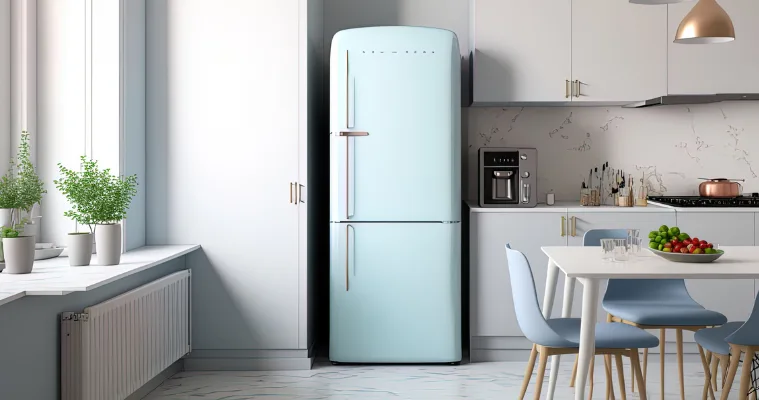
Types of Refrigerators
The easiest way to compare fridge layouts is to start with the door configuration. Layout affects not only storage, but also how large the fridge feels inside, how wide it is outside, and how easily it fits into your kitchen footprint.
Top-Mount Refrigerators
Browse: Top Mount Fridges
Top-mount fridges are the classic two-door design, with the freezer above and the fresh-food section below. These are traditional, value-focused options, with category sizes around 200–500L and features such as inverter compressors, humidity-controlled crispers and flexible shelving. Many top-mount models are around 160–180cm high, 70–80cm wide and 60–70cm deep, making them a practical choice for apartments, couples and smaller households.
Shop Top Mount Fridges
LG 375L Top Mount Refrigerator
Hisense 496L Top Mount Refrigerator
Westinghouse 503L Top Mount Refrigerator
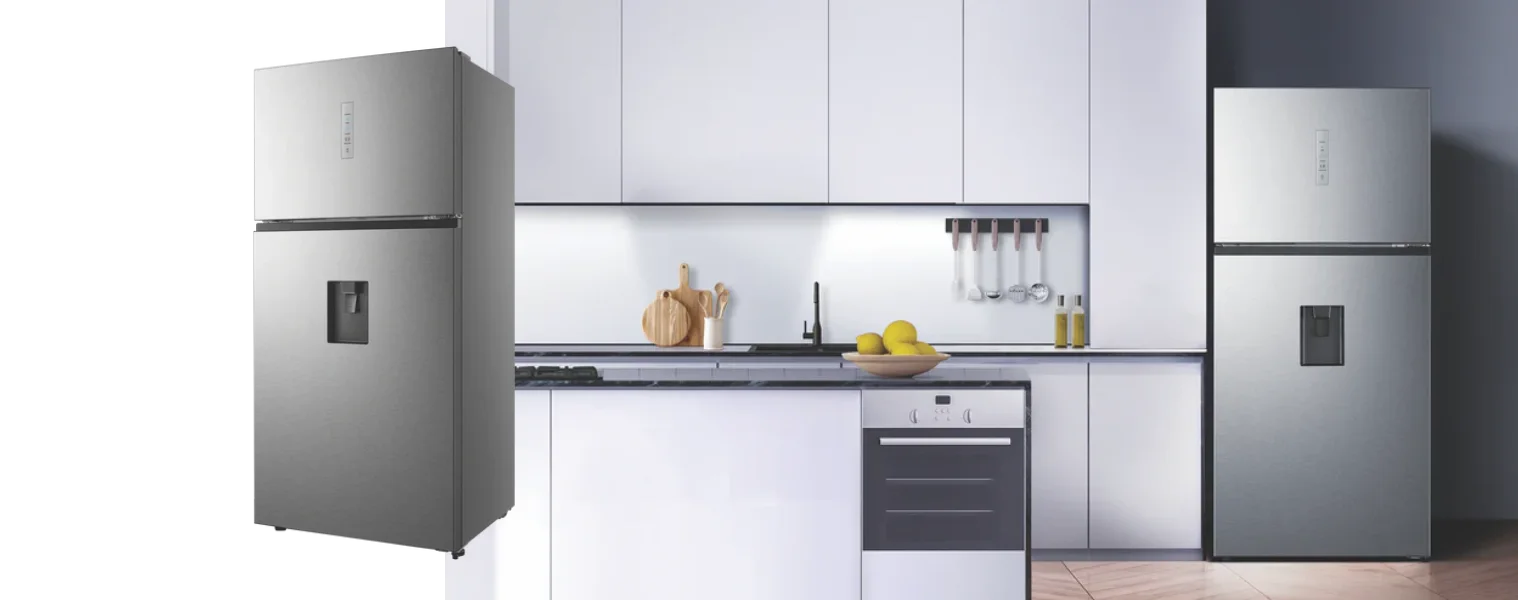
If you want a regular size refrigerator that is simple, familiar and budget-friendly, this is often the best place to start.
Bottom-Mount Refrigerators
Browse: Bottom Mount Fridges
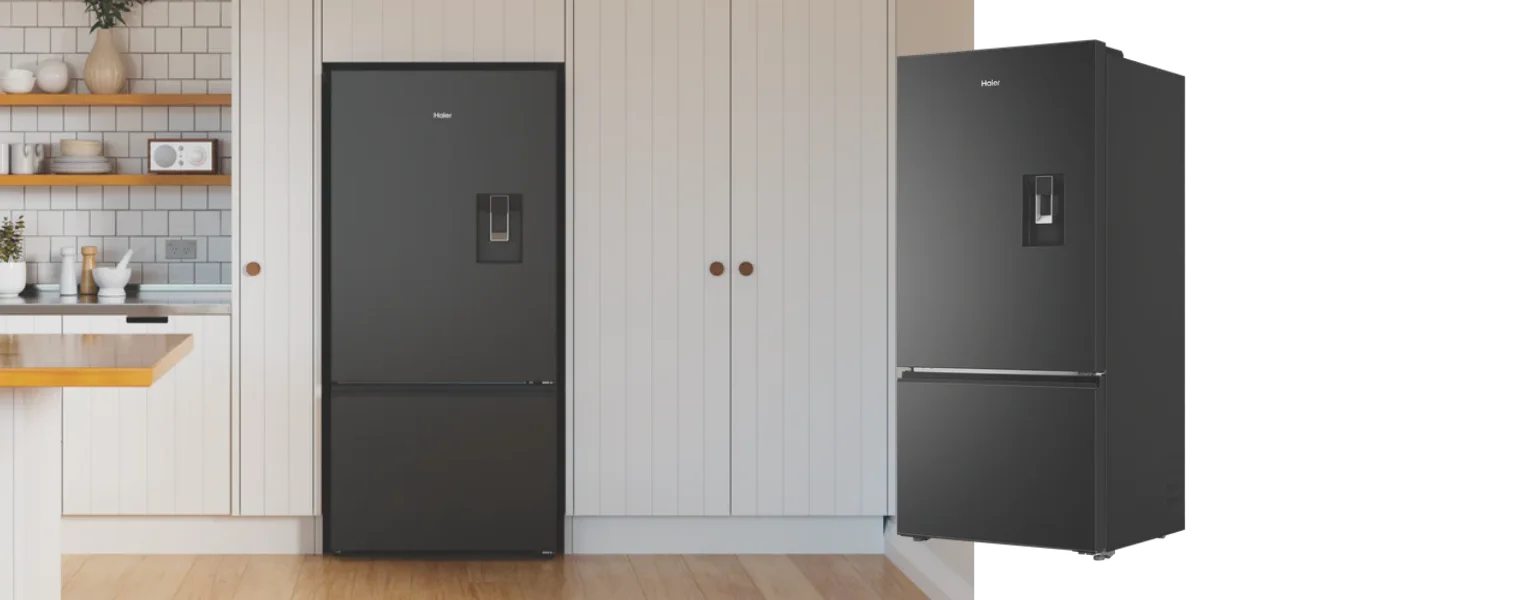
Bottom-mount fridges put fresh food at eye level and move frozen storage into drawers below. That makes them especially handy for households that reach for milk, leftovers, produce and lunchbox items more often than frozen food. These easy-access models with flexible storage, are often in the 300–500L range with average dimensions around 170–180cm high, 70–80cm wide and 70–80cm deep.
For many shoppers, this is the sweet spot between compact top-mount practicality and larger premium formats.
Shop Bottom-Mount Fridges
Haier 514L Bottom Mount Refrigerator
LG 340L Instaview Bottom Mount Refrigerator
Hisense 500L Bottom Mount Refrigerator
Side-by-Side Refrigerators
Browse: Side-by-Side Fridges
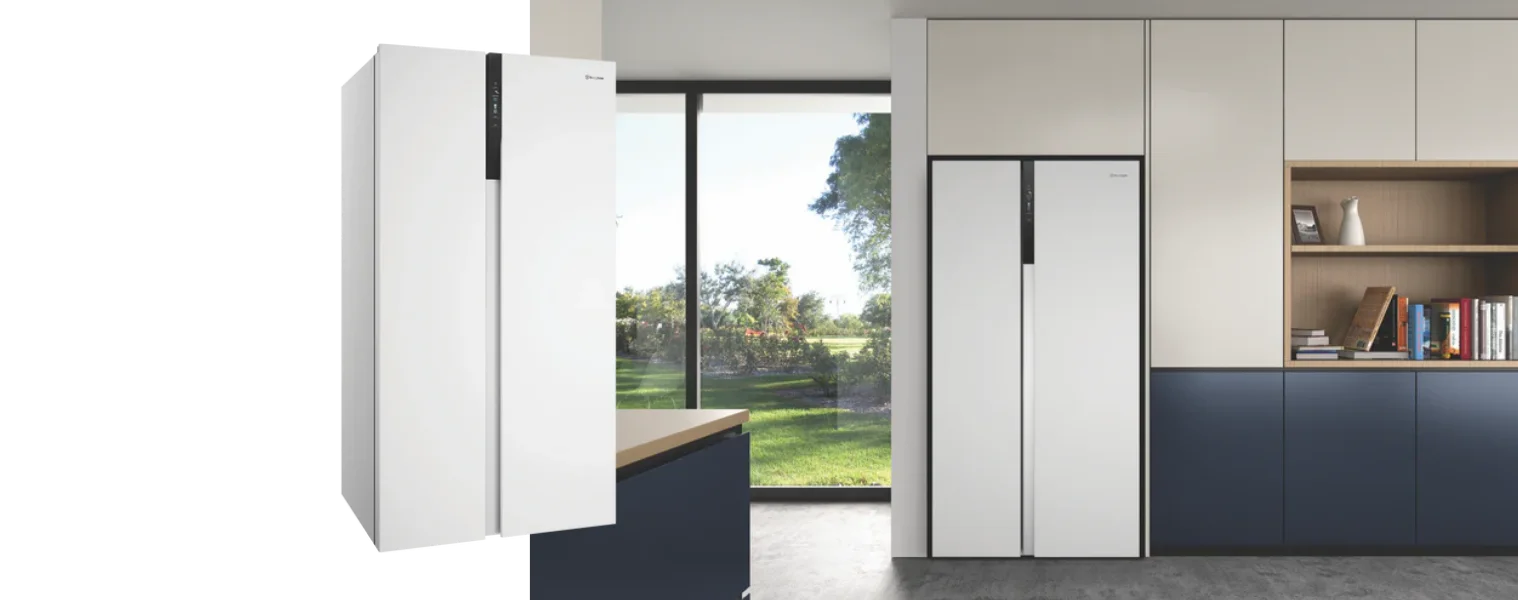
Side-by-side fridges split the fridge and freezer vertically, usually with the freezer on the left and fridge on the right. These are great for big families and entertainers, at 500–700L. Typical dimensions are about 170–180cm high and 90–100cm wide, so they suit homes that need generous storage but still want narrower individual doors.
They are especially useful if your household relies heavily on frozen food, though dispenser models can reduce freezer space and larger capacity usually means higher running costs.
Shop Side-by-Side Fridges
Samsung 655L Side By Side Refrigerator
Westinghouse 624L Side by Side Refrigerator
CHiQ 559L Side By Side Refrigerator
French Door Refrigerators
Browse: French Door Fridges
French door fridges combine two upper fridge doors with one or more freezer drawers underneath. The layout gives you wide, easy-to-reach shelving for platters, meal prep containers and bulky groceries. With great features such as adjustable door bins, pull-out freezer drawers, wide shelves, and optional ice and water dispensers, many models are around 520–600L and roughly 170–180cm high by 90–100cm wide.
If you are shopping a refrigerator by dimensions and need wide shelf space without the full swing of one large door, French door is often the premium answer.
Shop French Door Fridges
Fisher & Paykel 511L French Door Refrigerator
Haier 509L French Door Refrigerator
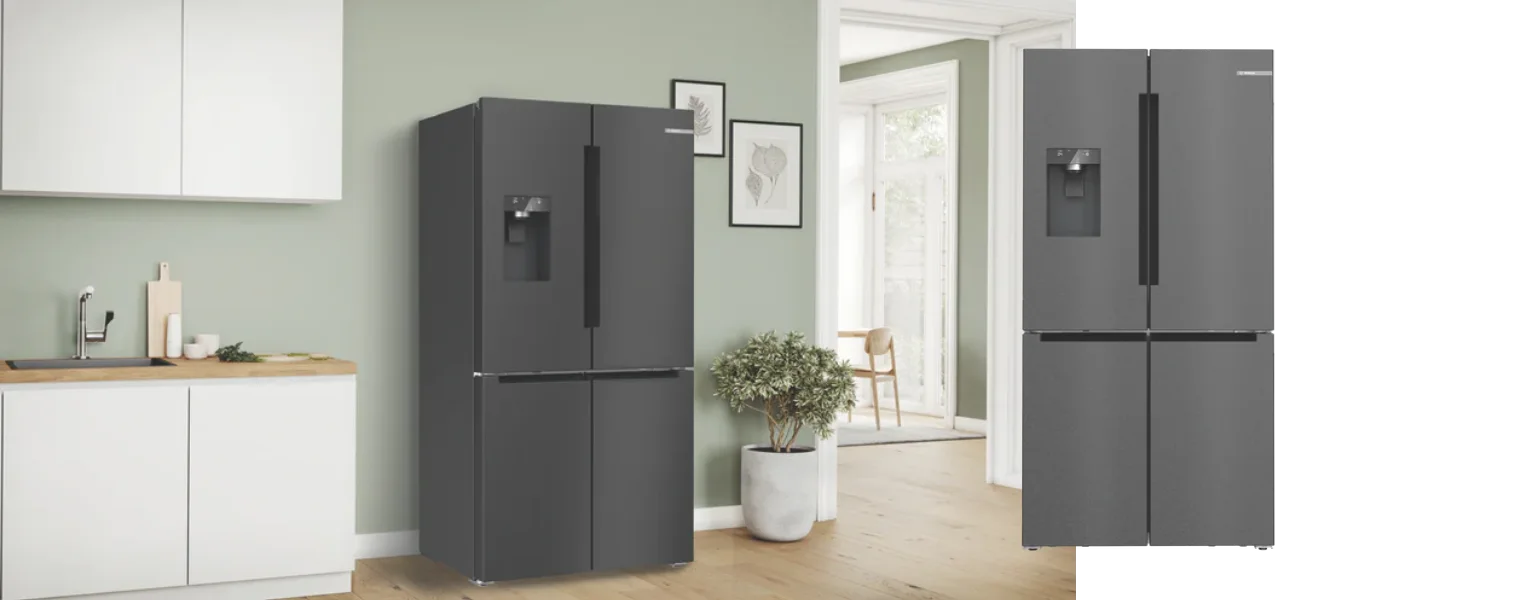
Bosch 574L Quad Door Refrigerator
Understanding Refrigerator Sizes
Standard Refrigerator Sizes
There is not one universal standard size refrigerator in Australia. So size really depends on whether you buy top-mount, bottom-mount, side-by-side or French door. That is why the safest way to compare models is to look at both litres and external dimensions together.
For a quick guide:
Top-mount fridges are commonly about 540–800mm wide, 1300–1800mm high and 590–750mm deep.
Bottom-mount models are similar at 540–800mm wide, 1300–1800mm high and 590–750mm deep.
Side-by-side units are typically about 760–910mm wide, 1700–1780mm high and 850–940mm deep, while
French door models are usually around 920–960mm wide, 1700–1800mm high and 900–960mm deep.
But remember these fridge sizes are a starting point, and commonly fridge sizes vary by brand, finish, hinges and handles.
Capacity is the other half of the sizing equation.
At The Good Guys, refrigerator capacity is based on usable space, excluding shelves and drawers, while manufacturers may publish usable/net or total/gross capacity. That is why two models with similar outside fridge measurements can feel very different inside. When you compare the measurements of a fridge, always check both the litres and the external cabinet dimensions listed on the spec sheet.
Measuring for Your Space
Before you buy, measure the space properly.
A tape measure, your phone for notes and photos, and the product spec sheet are the essential tools.
First, measure the cavity width, height and depth in millimetres. Do not assume the current fridge tells you everything; cabinetry, skirting, flooring and wall alignment can change the usable opening. If you want to shop a refrigerator by dimensions, your maximum allowable width, height and depth should come first, then the product shortlist.
Second, leave room for ventilation. The general rule is at least 5cm on each side, 10cm on top and 5cm at the rear and allow for air gaps at the sides, back and top.
Many people comparing sizes online forget that dimensions must also take into account differences in handles, hinges and side clearance. Always check the specific installation guide for your chosen model, because manufacturer clearances vary.
Third, measure door clearance and working space. Make sure the doors can open fully without hitting a wall, island, pantry or nearby appliance, and confirm that freezer drawers can slide out completely. This matters even more with wider French door and side-by-side models, where the body may fit but the doors may not open as comfortably as you need.
Fourth, measure the delivery path. Measure your entry doors and hallways. The route into the home matters just as much as the kitchen cavity. Compare the measurements of a fridge to the space it will pass through, not just the spot where it will live. That extra step saves a lot of installation-day pain.
Finally, check for special installation needs. If you want plumbed ice and water, you may need a plumber. If your fridge will sit under overhead cabinetry, leave enough top clearance for ventilation and confirm whether any controls or hinges need extra room above the unit. Once you know your fridge measurements, the shortlist gets much easier.
Practical Tips for Selecting Your Refrigerator
Determining Your Lifestyle Needs
The right fridge size is the one that fits your home and your family habits. Household numbers are a useful starting point, but shopping style matters just as much. A couple who eats out often can manage with far less space than a couple who batch cooks every Sunday, buys in bulk and stores extra produce.
For 1–2 people: 200–400L using usable capacity may be suitable.
For 3–4 people: 520–600L usable capacity.
For 5+ people, CHOICE says 440L+ can work but 700L usable space is the better option.
Just remember - the way your family stores, preps and entertains can make a big difference to the above quick guide - so take some time to evaluate how you will use your fridge when making your decision as comparing fridge sizes by litres alone can be misleading. A tall, narrow 450L bottom-mount may suit a fresh-food household better than a wider side-by-side with the same headline capacity. Likewise, a top-mount can be a smarter option for renters and smaller kitchens, while French door and side-by-side models make more sense for entertainers, larger families or homes that need more freezer flexibility.
You may also be interested in ...
FAQs
What size fridge for family of 4?
For a family of four, a good working range is about 350L to 600L, depending on how often you cook, whether you buy in bulk, and whether the retailer is quoting usable or total capacity. If you meal prep, entertain or need more freezer room, lean toward the upper end.
What is the size of a standard fridge in Australia?
There is no single official standard size refrigerator in Australia. If you are asking about a regular size refrigerator, many full-size top-mount and bottom-mount models fall around 540–800mm wide, 1300–1800mm high and 590–750mm deep, while larger side-by-side and French door models are wider and deeper again. Among the common fridge sizes, top-mount and bottom-mount designs are usually the safest first check for a typical family kitchen.
What is the most popular size refrigerator?
There is no single most popular refrigerator size, though a mainstream sweet spot is mid-size family models, because that covers a large share of 3–4 person households in Australia. Calling it a common choice however might be more correct than calling it ‘popular’.
Is it better to have a bigger refrigerator?
Not always. A larger fridge gives you more flexibility, but it also takes up more floor space and may use more energy. The better approach is to size up only enough to cover your usual groceries, leftovers, freezer needs and entertaining, then compare within that bracket.
Ready to shop Fridges?
Once you know your fridge measurements, it is much easier to compare layouts confidently. Start with Top Mount Fridges, Bottom Mount Fridges, Side-by-Side Fridges or French Door Fridges, then narrow your shortlist by width, height, depth and usable capacity.
Don't forget ... The Good Guys offers Next Day Delivery on a range of Fridges and Freezers. Click to find out what is available for your purchase here: The Good Guys Delivery Options.