
ARTICLE
How to clean a Dishwasher: Complete step-by-step guide
March 10, 2026-5 min read
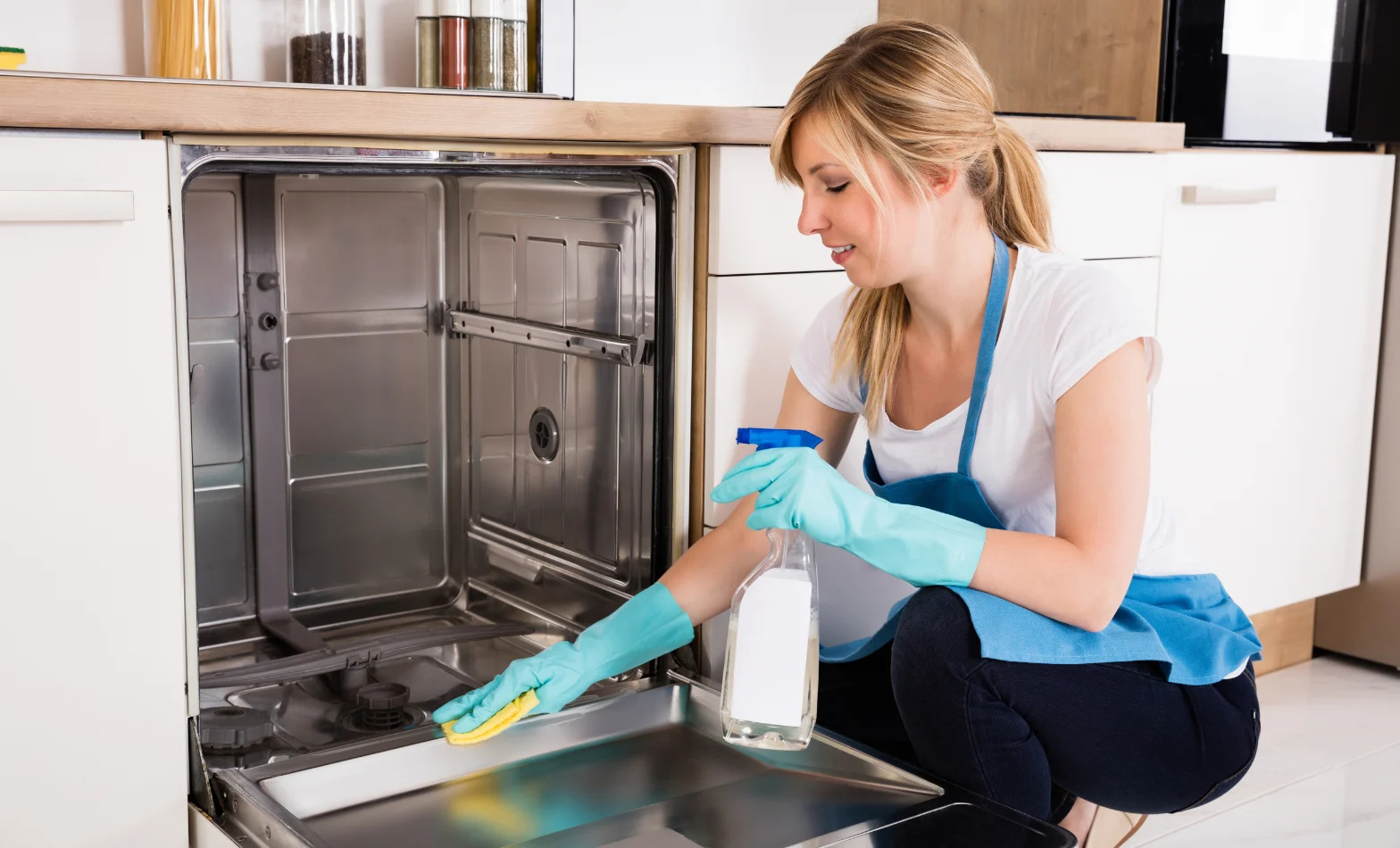
Did you know the hardest working cleaner in your kitchen - your dishwasher, also needs cleaning? Regular dishwasher cleaning is essential for keeping your appliance working efficiently, hygienically and even quietly. Over time, food particles, grease, detergent residue and hard‑water minerals can build up inside the dishwasher — even though it’s designed to clean dishes.
A dirty dishwasher can lead to unpleasant odours, cloudy glassware, poor cleaning performance and unnecessary wear on internal components. Regular maintenance keeps your dishwasher running smoothly and ensures your dishes come out hygienically clean after every cycle.
Key Takeaways
Regular cleaning prevents odours, improves wash quality & helps your dishwasher last longer.
You can clean effectively using everyday items like vinegar, baking soda & lemon.
A routine mix of daily, weekly & monthly tasks keeps your dishwasher running smoothly.
Deep cleaning the filter, spray arms & interior helps fix poor cleaning results.
Natural cleaning options are eco-friendly, safe & cost-effective compared with commercial products
You may also be interested in:
Energy efficient Dishwashers buying guide
How to install a Dishwasher: the ultimate guide
Kitchen kingpin: 8 reasons to upgrade to a Bosch Dishwasher
Haier Dishwasher range buying guide
How cleaning affects performance and hygiene
Cleaning your dishwasher improves water flow, spray coverage and heat efficiency. Removing build‑up from filters, spray arms and seals prevents bacteria and mould growth, reduces odours and helps the appliance reach proper cleaning temperatures. A well‑maintained dishwasher can also use water and energy more efficiently.
Essential tools and materials for cleaning a Dishwasher
Many of the tools you need to keep your dishwasher clean are probably already available in your home, such as vinegar and baking soda, or you can select commercially prepared cleaning agents to keep your dishwasher sparkling clean.
Common household items you can use to safely clean your dishwasher
Vinegar and baking soda – dissolve grease, mineral deposits and odours
Lemon juice – naturally deodorises and cuts through residue
Essential oils – optional for fresh scent and antibacterial benefits
Soft cloths, sponges and an old toothbrush for seals and corners
These natural options are safe for most dishwasher interiors and ideal for routine maintenance.
Commercial cleaning products
Commercial dishwasher cleaning products are specially formulated to break down grease, food residue and limescale that can build up inside your appliance over time. Using a dishwasher cleaner helps improve cleaning performance, remove odours and protect internal components like filters and spray arms. Just be sure to choose a commercial dishwasher cleaner that’s compatible with your dishwasher brand and model.

Step-by-step guide: How to clean your Dishwasher
Daily maintenance tips
To keep your dishwasher performing at its best follow these quick daily tips. Before each load:
Spot check the drain area for food debris and remove carefully
Carefully scrape or wipe as much food residue off before loading
Leave the dishwasher door slightly open after cycles to reduce moisture.
Weekly cleaning routine
On top of your daily routine, once a week it’s a good idea to do the following dishwasher checks:
Check if your dishwasher needs rinse aid
Remove the filter grate and spot check for food debris
Wipe down the door edges, seals and control panel
Monthly deep cleaning process
Every month or so it’s a good idea to give your dishwasher a deeper clean.
Place a cup of white vinegar on the top rack and run a hot cycle
Wipe interior walls, door seals and edges with a damp cloth
Inspect spray arms for blockages
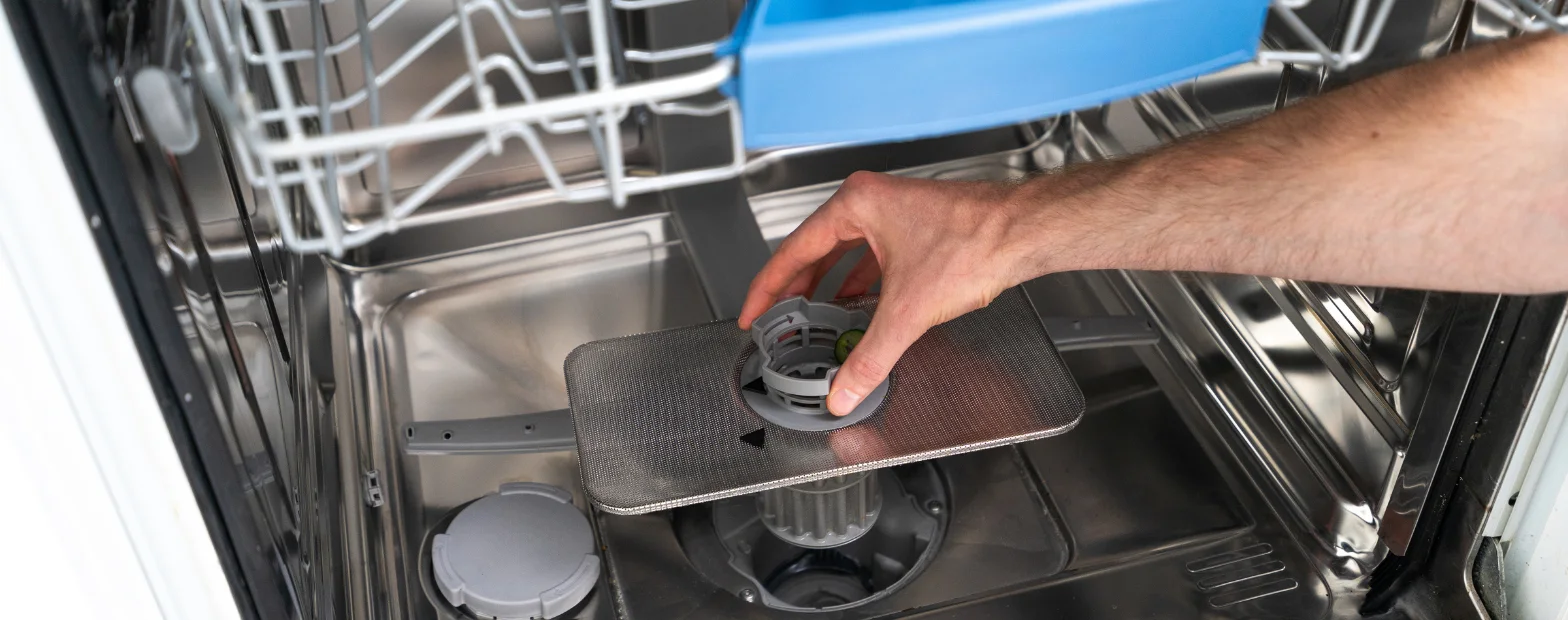
Remove and rinse the dishwasher filter under warm water
Use a soft brush to carefully remove any trapped food and grease
Remove spray arms and clear clogged holes
Clean interior corners, hinges and seals thoroughly
Troubleshooting common Dishwasher issues
Persistent odours
Persistent dishwasher odours are usually caused by trapped food particles, grease build-up or stagnant water inside the appliance.
How to fix it:
Remove and thoroughly clean the dishwasher filter under warm water
Check the drain area for food debris or blockages
Run a hot wash with white vinegar to break down grease and odour-causing residue
Clean door seals and interior edges where grime collects
Leave the dishwasher door slightly open between cycles to reduce moisture
Regular cleaning prevents bacteria and mould growth, which are common sources of bad smells.
Poor cleaning results
If dishes come out dirty, cloudy or streaked, the issue is often related to water flow or build-up inside the dishwasher.
Common causes:
Clogged spray arms blocking water flow
Dirty or blocked filters
Hard-water mineral build-up
Overloading the dishwasher or incorrect detergent use
How to fix it:
Remove and clean spray arms, clearing blocked holes
Rinse and reinstall the filter properly
Run a cleaning cycle with vinegar or a commercial dishwasher cleaner
Avoid overcrowding and ensure dishes are loaded correctly
Use the right detergent for your water type and dishwasher model
Keeping internal components clean helps restore proper water pressure and improves overall wash performance.
DIY cleaning solutions and environmental impact
Do It Yourself Dishwasher Cleaners are an affordable solution to commercially prepared cleaners - many can be made from items you may already have at home. A big positive is that they are relatively easy to make and, as per the popular recipes below - avoid using harsh chemicals.
Homemade Dishwasher Cleaner recipes
Important Safety Tip: Never mix vinegar and baking soda together at the same time, always run them in separate cycles to avoid neutralising their cleaning power.
1. Vinegar deep-clean recipe (best for grease & limescale)
What you need:
1 cup white vinegar
How to use: Place the vinegar in a dishwasher-safe cup on the top rack. Run an empty dishwasher on the hottest cycle.
Why it works: Vinegar breaks down grease, mineral deposits and odour-causing residue, making it ideal for routine dishwasher maintenance.
2. Baking soda deodorising clean (best for odours)
What you need:
1 cup baking soda
How to use: After running a vinegar cycle, sprinkle baking soda across the bottom of the dishwasher. Run a short hot cycle.
Why it works: Baking soda neutralises odours and lifts light residue without damaging internal components.
How often should you use homemade Dishwasher cleaners?
Weekly: Baking soda or lemon freshen
Monthly: Vinegar or vinegar + baking soda deep clean
As needed: If odours or poor cleaning results appear

FAQs
Can I use regular dish soap instead of dishwasher detergent to clean my dishwasher?
No. Regular dish soap creates excessive suds that can overflow, trigger error codes and damage internal components. Dishwashers are designed to use low-suds dishwasher detergent or specific cleaners. For safe natural cleaning, use vinegar and baking soda in separate cycles instead of dish soap.
Why does my dishwasher leave a white film on my glasses even after I've cleaned it?
A white film can be caused by hard-water mineral deposits or excess detergent. Running a vinegar cycle, using rinse aid and adjusting detergent amounts may be able to help.
Why does my dishwasher make a grinding noise during cycles?
Grinding noises may mean food debris or even broken glass or plastic is stuck in the filter, pump or spray arms. It’s important to check your dishwasher asap. If possible, stop the cycle, turn off the dishwasher and inspect these areas as continuing to run the dishwasher may cause damage. Check your model specifications to find out if you are able to remove parts to inspect or need to contact support.
How long should I wait between running vinegar and baking soda cycles when deep cleaning?
Wait at least 30 minutes between cycles. Vinegar needs time to break down grease and limescale before baking soda neutralises odours. Running them back-to-back without waiting reduces their effectiveness.
Time for a new Dishwasher?
Sometimes not even a deep clean can save an old dishwasher. Maybe it’s not running as well as it used to or you’ve realised you’re missing out on the latest features and innovations. Shop The Good Guys Dishwasher range and check out this handy Dishwasher Buying Guide - it has everything you need to know to choose the right dishwasher for you and your family.


